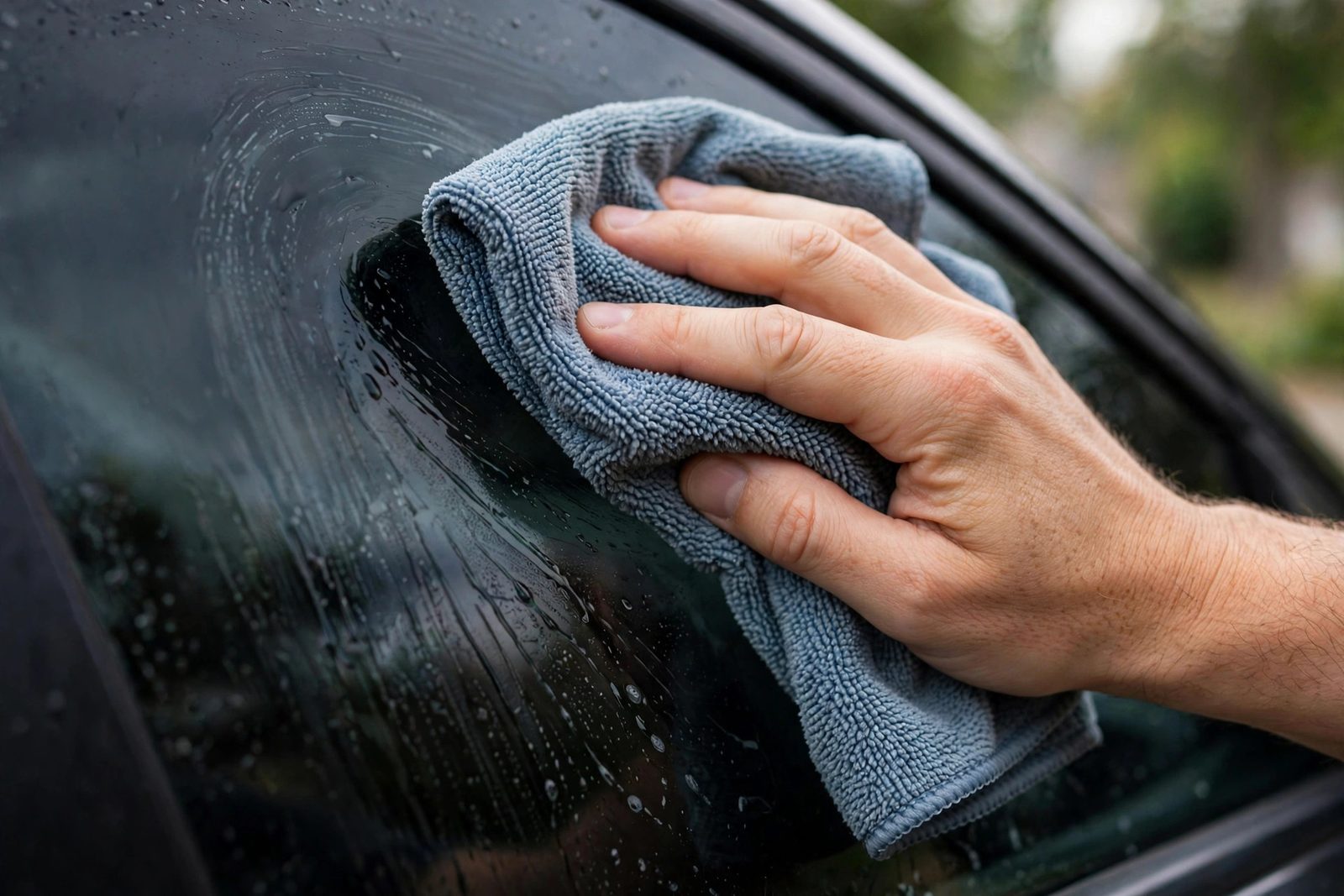
Knowing how to clean window tint without scratching it comes down to two rules: nothing with ammonia, nothing rougher than microfiber. Film lives on the inside of the glass, soft side exposed to every wipe — treat it like an eyeglass lens, not a countertop, and it stays clear for years.
This routine works for car tint, home film, and office glass. It assumes the film has finished curing; brand-new installs follow the waiting rules in our cure-time guide first.
Why window tint scratches so easily
Window film is polyester with a scratch-resistant coating, but “resistant” is doing real work in that sentence. The coating shrugs off light contact; it loses to grit, paper fibers, and abrasive pads every time.
The real enemy is trapped dirt. Dust and pollen — Snellville springs deliver both generously — sit on the film, and a dry wipe drags them across the surface like sandpaper. Wet first, wipe second is the whole secret.
Edges are the fragile zone. Film terminates at the glass edge and around dot-matrix borders; aggressive wiping there lifts corners, and lifted corners invite peeling that no cleaning can undo.
Heat-aged film scratches easier still. If your tint is old enough to look tired, clean it like it is fragile — because it is — and read the failure signs near the end of this post.
What you should never use on tinted glass
Ammonia is the headline: standard blue glass cleaners use it, and ammonia migrates into film adhesive, weakening the bond and clouding the layer. Peeling edges and purple-ish haze often trace back to years of the wrong spray bottle.
Abrasives are the second family: scouring powders, magic-eraser sponges, stiff brushes, and anything marketed as “cutting through grime.” On film, cutting is literal.
Paper products round out the list — paper towels and newspaper are wood fiber, and wood fiber scratches soft coatings. They also shred lint into the edges.
- Ammonia-based glass cleaner on the filmed side
- Paper towels, newspaper, or shop rags with grit
- Razor blades or scrapers (glass-shop tools, not film tools)
- Scouring powders, abrasive sponges, stiff brushes
- Vinegar-heavy DIY mixes used repeatedly — acidic and unnecessary
Keep the ammonia cleaner for mirrors and the outside surface of the glass if you must — the filmed side gets its own bottle, labeled, so nobody “helps” with the wrong one.
The safe supplies list for tint cleaning
You need four things, all cheap:
Assemble them once and the routine takes minutes:
- Two clean microfiber towels — one to wash, one to dry
- A spray bottle of ammonia-free, tint-safe cleaner — or distilled water with one drop of mild soap
- Distilled water for mixing and rinsing (no mineral spots)
- A soft detailing brush for dust around edges and seals
Wash the microfibers separately and never with fabric softener, which coats the fibers and smears. Retire any towel that has touched wheels, engines, or the ground — grit is forever. Our installs at O2 car tinting leave with this same short list.
How do I clean window tint without scratching it?
Work in shade on cool glass — cleaner dries too fast on a sun-baked Snellville window and streaks before you can buff it.
The five-minute routine:
- Dust the dry film lightly with the soft brush or a dry microfiber
- Spray cleaner generously — the surface should be wet, not damp
- Wipe with the wash microfiber in straight, overlapping passes, light pressure
- Flip to a clean towel face whenever the first loads up with grime
- Buff dry with the second microfiber until the glass disappears
- Run one gentle pass along edges — never dig into them
For home film, same rules at larger scale: a microfiber mop head replaces the towel, and two-bucket thinking applies — rinse the mop so you are not redepositing the first window’s dirt on the fifth. See home window tinting for the films this protects.
How often should you clean tinted windows in Snellville?
Car interiors: every few weeks, or when road-film haze builds on the inside glass. Light, frequent cleaning beats rare, aggressive cleaning — grime never gets the chance to need force.
Home film: a few times a year is plenty, timed after pollen season and before holiday guests. Office glass follows its janitorial schedule, provided the crew’s chemicals pass the ammonia test — ask them.
Three Snellville-specific wrinkles:
- Spring pollen coats everything — dust dry film gently before any wet wipe
- Summer humidity streaks cleaner; buff a moment longer
- Well and sprinkler water spots mineralize fast — distilled water in the bottle prevents them
- Dog noses and kid fingerprints are fine — they wash off; the towel choice is what matters
If a window never comes clean no matter how correct the routine, the problem has moved from dirt to film condition — the next section’s mistakes, or age, have caught up with it.
New film gets one exception to every schedule: no inside cleaning until the cure window closes. When in doubt, wait — dirt is patient and removable; disturbed adhesive is neither.
Common mistakes that ruin tint
Dry-wiping dusty film. The single most common scratch source, and the easiest to fix: wet the surface first, always.
One towel for everything. The towel that cleaned your wheels yesterday carries grit today. Film towels live separately, washed separately.
Digging at edges and dot-matrix borders with fingernails or cards. Lifted edges do not reseal, and they invite the peeling that ends film life early.
Steam cleaners and pressure washers aimed at filmed glass and seals. Heat plus pressure finds every edge weakness at once.
Letting a detail shop use its standard glass product without asking. One ammonia wash will not kill new film, but a subscription to them will cloud it over a couple of years.
Scrubbing at a bubble or spot mid-cure. Most early marks are water finishing its exit — cleaning pressure turns them into permanent ones.
When to call a professional
Call when correct cleaning no longer restores clarity: fixed cloudiness, visible scratch fields, bubbling, or edges that lift further each month. Those are film failures, not dirt.
At O2 Window Tinting, 3304 Stone Mountain Hwy, Snellville, we assess damaged film free and tell you plainly whether it is cleanable, repairable, or a removal-and-replace. Removal runs $149–$299 when it comes to that.
Open Monday–Friday 9 AM–6 PM, Saturday 9 AM–5 PM, closed Sunday. Call (770) 674-2766 — and feel free to bring the spray bottle you have been using; we will check the label with you.
Frequently Asked Questions
How do I clean window tint without scratching it?
Use an ammonia-free cleaner (or water with a drop of mild soap), spray it on liberally, wipe with a clean microfiber towel using light pressure, and dry with a second microfiber. Never use paper towels, ammonia glass cleaners, or anything abrasive on the film side.
Can I use Windex on window tint?
Not the standard ammonia formula — ammonia attacks tint adhesive and is a leading cause of clouding and peeling edges. If a glass cleaner does not say ammonia-free on the label, keep it for the outside of the glass and mirrors only, never the filmed side.
What cleaner is safe for window tint?
Any cleaner labeled ammonia-free and tint-safe, or the DIY classic: distilled water with a single drop of baby shampoo or mild dish soap in a spray bottle. Distilled water matters in Snellville — it dries without the mineral spots tap water leaves behind film edges.
How often should I clean tinted windows?
Inside car glass every few weeks, or when haze builds; home film a few times a year. Wait until new film has fully cured before its first cleaning — about a week for cars, longer for large home panes — then clean gently on a regular rhythm rather than scrubbing rarely.
Why did my tint turn cloudy after cleaning?
Usually ammonia exposure breaking down adhesive, or a gritty towel micro-scratching the surface until it hazes. Cloudiness from adhesive failure does not wash off — if gentle ammonia-free cleaning does not clear it, the film itself is failing and needs a professional look.
Get help with window tinting in Snellville
Questions about your film’s condition, or ready for new film with care instructions in writing? Call O2 Window Tinting at (770) 674-2766 or start at car window tinting in Snellville.