Ceramic Window Tint in Snellville for Cooler, Clearer Drives
Maximum heat rejection in a legal shade, with no signal interference
Drivers comparing ceramic window tint Snellville options deserve numbers that mean something. At O2 Window Tinting, 3304 Stone Mountain Hwy, we explain ceramic film the honest way: total solar energy rejected (TSER) in the low-60s percent for quality ceramic, up to about 71% for flagship multi-layer ceramic, up to 99% UV blocked, and infrared figures treated with caution because brands measure them differently. Then we meter your installed result and put it in writing.
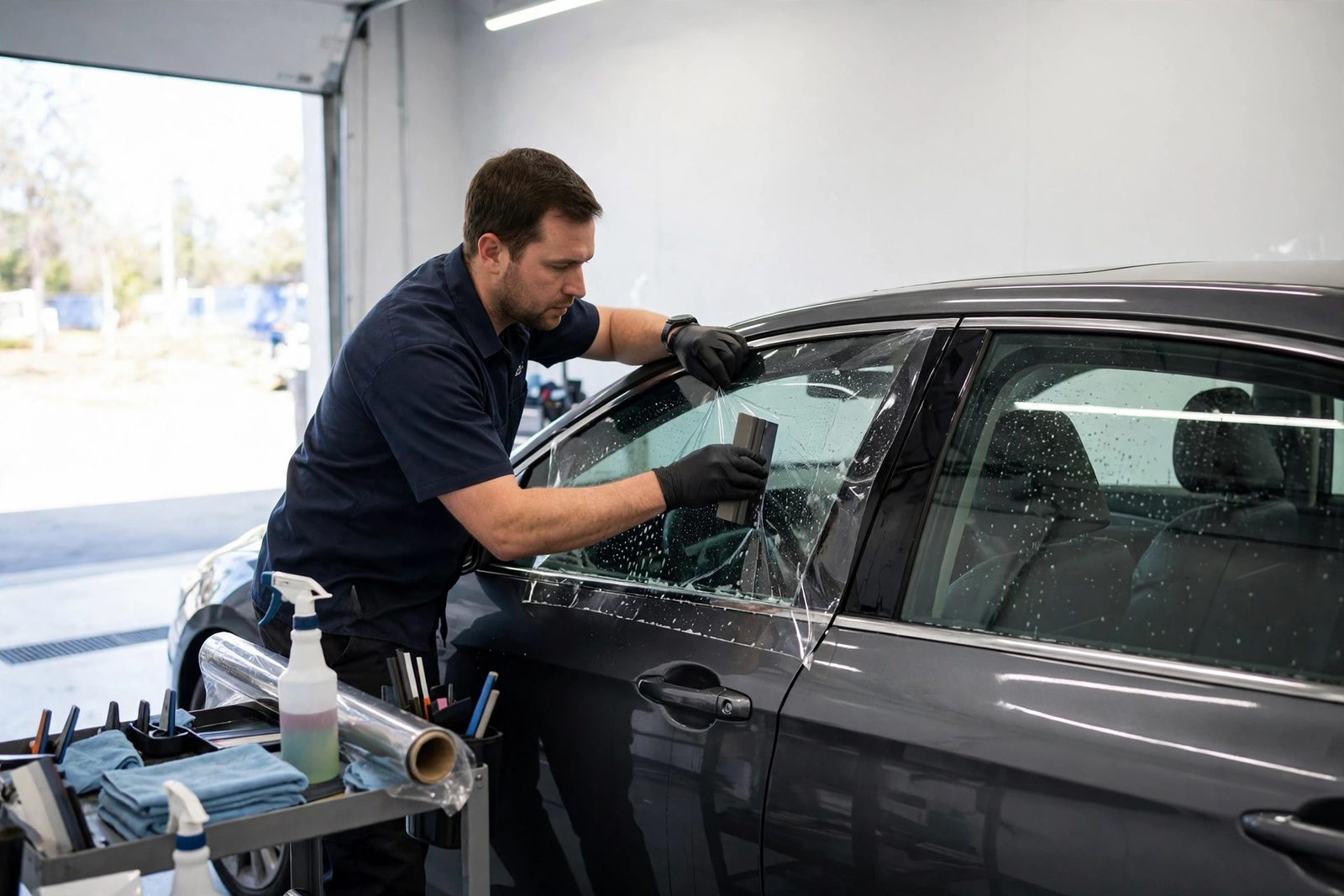
What ceramic window tint actually does
Ceramic film uses non-metallic ceramic nanoparticles suspended in the film layers to absorb and reject infrared energy — the part of sunlight you feel as heat — without relying on dark dyes or reflective metal. That is why a lighter ceramic shade can leave a cabin cooler than a much darker dyed film: darkness and heat rejection are related, but they are not the same thing. Visible light transmission still sets the shade you see; TSER tells you how much total solar energy the film turns away.
One claim needs retiring: no window film delivers “98% heat rejection.” That figure usually traces to a narrow infrared measurement at a single wavelength, quoted as if it described all solar energy. Honest comparison uses TSER, measured across the full spectrum on glass. When a shop quotes you an infrared number, ask whether it is film-only or on-glass and which wavelength band it covers — the answers explain why two “98%” films can feel completely different on Scenic Highway in August.
Why Snellville drivers upgrade to ceramic
Ceramic costs more than dyed or carbon film, so the reasons to pay for it should be concrete. These are the four that Snellville customers actually report back to us.
Heat rejection you can measure
Quality ceramic film reaches TSER in the low-60s percent range, and flagship multi-layer ceramic reaches up to about 71%. In a car parked through a Gwinnett workday, that is the difference between tolerable and punishing when you open the door at 5 PM.
No interference with your electronics
Ceramic contains no metal, so it cannot interfere with GPS, phone signals, key fobs or tire-pressure systems. Drivers who had signal trouble with older metalized film notice the difference immediately.
Color that stays true for years
There is no dye in ceramic film to break down, so it does not fade purple the way dyed film does. The shade you pick in our Snellville shop is the shade still on the car years later.
Strong UV block in lighter shades
Ceramic blocks up to 99% of UV even in lighter, clearly legal shades. Heat-first drivers who dislike a dark look can run a light ceramic and still protect skin, leather and dashboards.
How our ceramic tint installation works
Ceramic film rewards careful installation and punishes shortcuts, because contamination and poor shrinking show more on a premium film. Our process at the Snellville shop runs in five steps.
TSER-first film consultation
We start with how your car is used, then compare ceramic against carbon and dyed film using TSER — the like-for-like heat figure — rather than cherry-picked infrared percentages. You see the guide price for each tier before choosing.
Deep glass preparation
Every pane is scraped, cleaned and degreased. Ceramic film is optically clearer than cheaper film, which means dust or pollen sealed underneath is more visible, so prep on a ceramic job is deliberately slower.
Computer-cutting the pattern
Patterns are plotter-cut from a database of window shapes for your exact model. Reviewers of our shop mention the professional cutting equipment and software by name — it is central to how we work, not an upsell.
Shrinking and applying the film
Curved glass is heat-shrunk first so the ceramic film conforms without stress lines, then applied inside with slip solution and squeegeed in a deliberate pattern that pushes water out evenly.
Metering and documentation
We meter the combined film-and-glass VLT, record it on your receipt, and review cure care. Ceramic film can show moisture haze while curing in Georgia humidity; we explain what is normal so you are not guessing at day three.
Premium film, explained without the marketing fog
O2 Window Tinting is owned by Octavius Tolbert at 3304 Stone Mountain Hwy, Snellville, GA 30078, rated 4.9 on Google with 603 reviews. We sell ceramic film by type and performance, and we will happily explain why a flagship tier is or is not worth it for your car. What we will not do is quote a single-wavelength infrared figure as if it were total heat rejection, or claim a brand dealership we do not hold.
- TSER explained in plain English before you buy
- Infrared claims flagged when they are not comparable
- No metal in the film — zero signal interference
- Lifetime warranty on film
- Installed VLT metered and documented on your receipt
Why Snellville chooses O2 for ceramic tint
Ceramic is the tier where honest advice saves the most money, because the price gap over carbon is real. Here is how we approach that conversation at our Snellville counter.
We will talk you down a tier
One of our Google reviewers specifically remembers being told that putting ceramic over existing dealer tint would be a waste of money. That is the standard here: if carbon solves your problem for less, we say so.
Heat math, not heat slogans
We compare films on TSER and on-glass performance, and we tell you plainly that infrared percentages are not comparable across brands. You leave understanding what you bought, not repeating a slogan.
Legal shades that still perform
Because ceramic rejects heat without darkness, we can keep your fronts comfortably above Georgia's 28% VLT minimum and still deliver the cooling you came for. Performance and compliance are not a tradeoff at this tier.
The same shop stands behind it
Ceramic film carries a lifetime warranty on the film. We are open Mon–Fri 9 AM–6 PM and Sat 9 AM–5 PM at 3304 Stone Mountain Hwy — bring the car back to the installer, not a call center.
What our ceramic tint service includes
A ceramic install at O2 includes the consultation and documentation that a premium film deserves. Nothing about the job is priced as a surprise add-on at pickup.
Included with every ceramic install
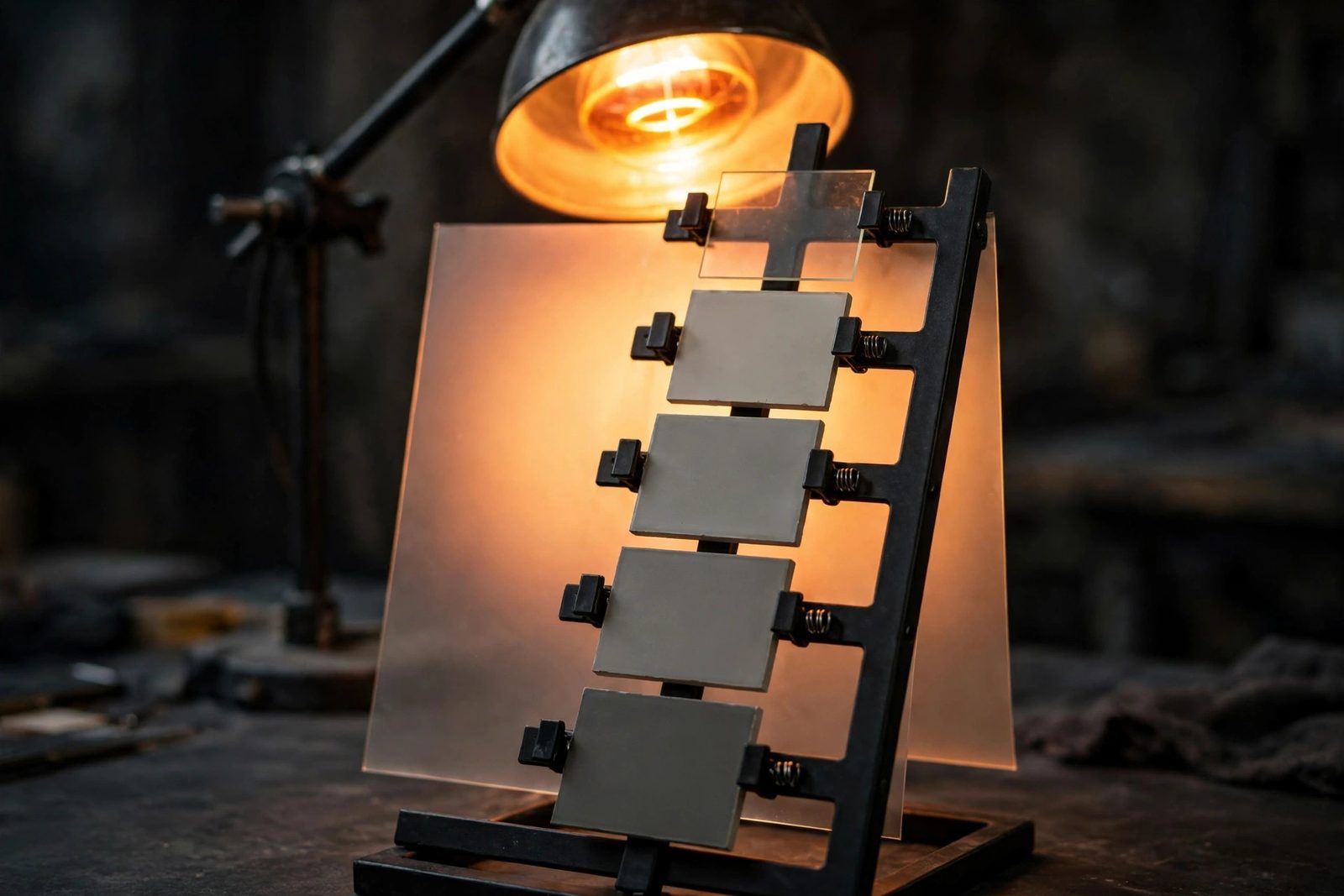
Side-by-side tier comparison
Dyed, carbon, ceramic and flagship ceramic samples on glass, in daylight, with October 2026 guide prices for each. Most drivers decide within minutes once heat and price sit next to each other.
Full prep and computer-cut patterns
Glass cleaned and degreased pane by pane, patterns plotter-cut for your model. On a clear, premium film this prep is what keeps the finished window looking like factory glass.
Legal shade planning
We calculate for the combined film-plus-glass reading, not the film's box number, so your chosen ceramic shade lands where we say it will when an officer's meter touches the glass.
Metered result on your receipt
Your receipt records the installed VLT. It is a small line of paperwork that proves the shade, supports the warranty conversation and removes doubt at any future inspection.
Cure guidance for Georgia humidity
Humidity stretches cure times here. We give you a realistic window for keeping windows up and explain the temporary haze or small water pockets that can appear while ceramic film dries.
Problems ceramic tint solves — and ones it replaces
Ceramic is often the second tint a car receives, bought after a cheaper film disappoints. These are the failures that bring Snellville drivers to the ceramic counter.
Dyed film that faded purple
Dyed film is the budget tier: dye in polyester that absorbs light, rejects the least heat, and breaks down under UV until it shifts purple and starts to bubble. It is the shortest-lived film we discuss, and most of our removal work is failed dyed film.
If the look is the only problem, the fix is removal and replacement. Drivers who plan to keep the car usually step up to ceramic so they never pay for the same job twice.
Metalized film fighting your phone and GPS
Metalized film reflects heat well, but its metal layer can interfere with GPS, phone reception and key fobs, and mirror-like versions risk exceeding Georgia's 20% reflectance cap.
Ceramic delivers equal or better heat rejection with no metal at all. Swapping a metalized film for ceramic ends the signal complaints and the reflectance worry in one job.
A dark tint that still feels hot
Owners are often surprised that a very dark dyed shade can feel hotter than a lighter ceramic one. Darkness controls visible light; it does not, by itself, control infrared heat.
We demonstrate the difference with samples and TSER figures, then replace the dark-but-hot film with ceramic chosen for heat first and shade second.
Fading interiors despite tint
Cheap film's UV protection fades as the film itself degrades, so dashboards keep cracking behind tint that looks intact from outside.
Quality ceramic blocks up to 99% of UV and holds that performance because there is no dye layer to exhaust. It is the tier we recommend when interior preservation is the real goal.
When Snellville drivers choose ceramic
A commuter parking in an unshaded lot near Stone Mountain Highway all day
We installed ceramic on the side and rear glass at a shade comfortably above the legal floor, chosen for TSER rather than darkness.
The driver reports the cabin reaches a bearable temperature far sooner, the steering wheel no longer burns, and the air conditioning settles instead of running flat-out the whole way home.
A Tesla owner cooking under a glass roof
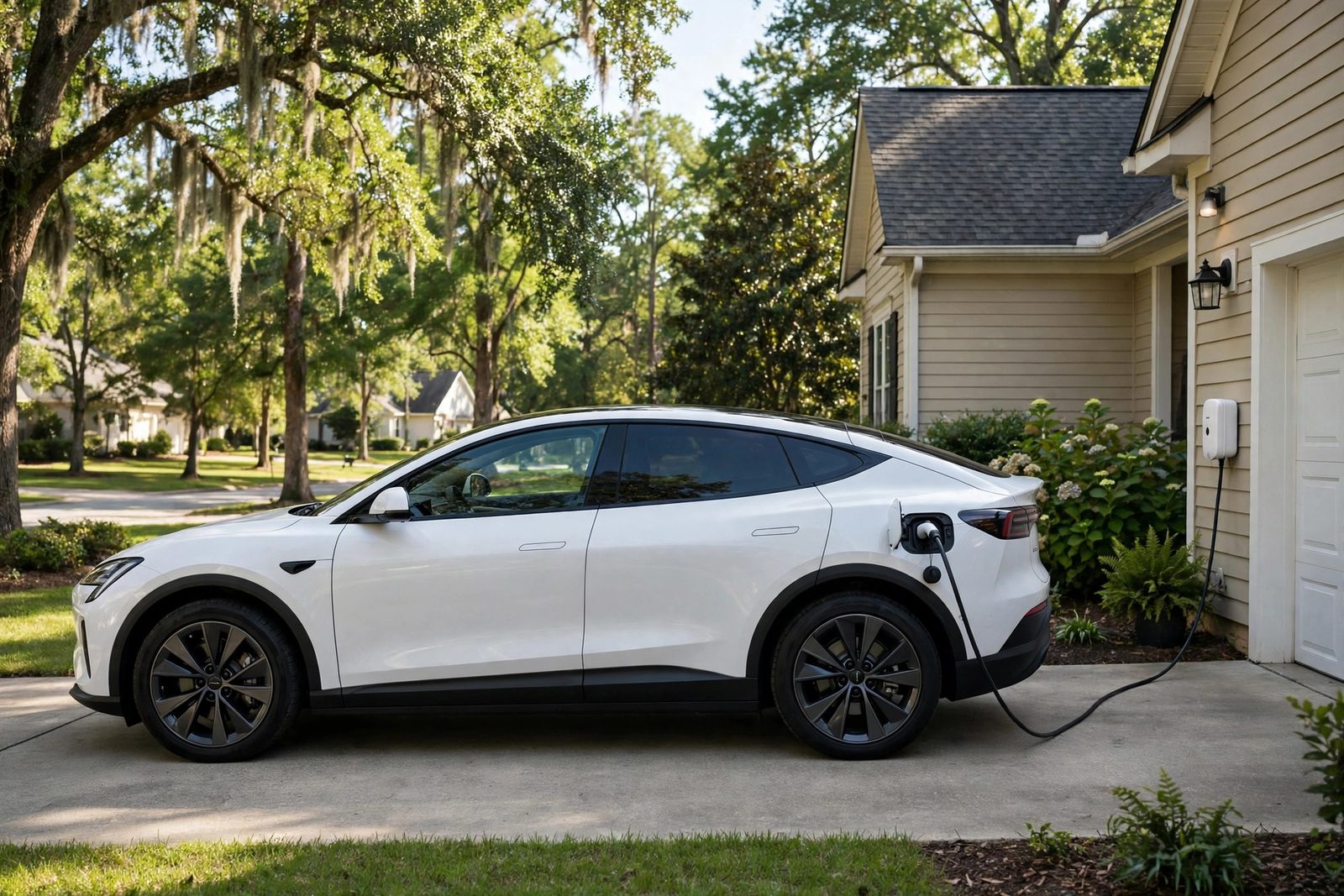
Electric vehicles with panoramic glass roofs pour heat into the cabin. We applied ceramic across the side glass and discussed the roof separately, with Tesla ceramic guide pricing of $500–950 depending on coverage.
Cabin heat dropped noticeably at midday stops, and because ceramic has no metal, every sensor, signal and phone-key function kept working exactly as before.
A driver replacing metalized film that weakened phone signal
The old reflective film came off, the glass was cleaned, and ceramic went on at a similar shade with none of the mirror finish.
Phone and GPS behavior returned to normal, heat rejection improved on TSER, and the car no longer risks a reflectance problem under Georgia's 20% cap.
A driver quoted a suspiciously cheap “ceramic” tint elsewhere
We compared the quote line by line and asked what film was actually being sold — a basic dyed film wearing a ceramic label, with heat figures no better than carbon. The driver chose genuine ceramic here instead, with TSER and price in writing before any film was cut.
The final figure sat above the teaser quote and below what the driver feared, and the film on the car is the film named on the receipt — the entire point of shopping on TSER rather than on labels.
Ceramic film, tools and technique
Tools & Equipment
Ceramic nanoparticles
Tiny ceramic particles in the film layers absorb infrared energy and convert a would-be hot cabin into rejected heat — without metal, without dark dyes, and without signal interference.
Flagship multi-layer ceramic
Stacked ceramic layers push TSER up to about 71%, the highest heat rejection we offer. It suits glass-roof EVs, west-facing commutes and drivers who simply want the best-performing legal film.
Standard ceramic film
A single-technology ceramic with TSER up to the low-60s percent range. For most Snellville sedans and SUVs it delivers nearly all the real-world benefit at a friendlier guide price.
Carbon film, for comparison
Carbon sits one tier down: matte, color-stable, no signal issues, with moderate heat rejection. It is the honest alternative when ceramic's price does not fit the car's remaining life.
TSER, explained
Total Solar Energy Rejected combines UV, visible and infrared performance into one on-glass number. It is the only heat figure we compare across film types, because it is the only one measured the same way.
Infrared percentages, handled carefully
Brands measure infrared rejection over different wavelength bands, sometimes film-only. A higher IR number from one brand can describe a cooler-feeling film from another, which is why we never sell on IR alone.
Methods & Techniques
Plotter cutter
Ceramic patterns are cut by computer for your exact vehicle. Precision cutting matters more on premium film, where a hand-trimmed edge is both uglier and more likely to lift.
Heat gun
Used to shrink ceramic film to curved rear glass before application. Ceramic film needs patient, even shrinking; rushed heat work is how stress lines and fingers happen.
Tint meter
Confirms the installed shade after the job. On a ceramic install we record the combined reading on your receipt the same day.
Slip solution and squeegees
Controlled slip lets us position clear ceramic film without trapping dust, and firm squeegee passes clear the water so the film cures flat and stays clear.
Ceramic tint across Snellville and Gwinnett
Ceramic buyers tend to be Snellville's longest commuters and newest-car owners — drivers who feel heat for an hour a day, every day. We install ceramic for customers across Snellville and in Lawrenceville, Loganville, Grayson, Lilburn and Stone Mountain.
Service Areas
Professionals parking near the Towne Center choose ceramic for cars that sit outdoors through the workday and need to cool fast at pickup time.
Hybrid and EV owners along the Highway 124 corridor ask for ceramic specifically because it protects range-sapping air-conditioning loads without touching vehicle electronics.
Households here often tint the newer family vehicle in ceramic first, then bring the second car back after feeling the difference through one summer.
Parents tinting a student's first car pick lighter ceramic shades: strong UV and heat control, clearly legal, and none of the too-dark look that worries new drivers at night.
Drivers facing the longest runs toward Atlanta treat ceramic as commuter equipment. An hour each way makes the heat math easy to justify.
Local Considerations
Heat is the purchase, not darkness
Snellville ceramic buyers usually arrive asking about shade and leave talking about TSER. We plan the job around your parking and commute, not around how dark the car can look.
Glass roofs and large rear glass
Modern cars carry far more glass than the sedans of a decade ago. Bigger curved rear panes and panoramic roofs are exactly where ceramic's heat advantage grows.
Humidity and cure time
Ceramic film curing in a humid Gwinnett summer can take longer to fully clear. We set expectations honestly at handoff instead of promising a perfect window tomorrow morning.
A ceramic upgrade that ended the purple-film cycle
A Snellville Accord arrived with dyed film that had turned purple and begun bubbling over the rear defroster. The owner had already paid for tint once and wanted the next install to be the last one.
We removed the failed film with steam, cleaned the glass, and installed ceramic on all side and rear windows. The owner chose a mid shade that meters legal everywhere on the car.
Caring for the new ceramic film
The owner followed the cure window before rolling windows down and switched to ammonia-free cleaner, which protects the film's surface over the long term.
An SUV owner had metalized film that looked mirror-bright and was suspected of weakening the key fob's range. Heat control was fine; the electronics complaints were not.
We replaced the metalized film with ceramic at a comparable shade. Reflectance dropped well under Georgia's 20% cap and the reflective look disappeared.
Caring for the new ceramic film
With no metal in the film, the fob and phone issues ended immediately. The owner kept the metered receipt with the vehicle's paperwork.
A new EV owner wanted maximum heat control for a glass roof but refused a dark cabin. Dark film was never the requirement — heat was.
We installed flagship multi-layer ceramic in a light, legal shade across the side glass and roof glass. TSER, not darkness, did the work.
Caring for the new ceramic film
The owner was briefed that light ceramic can show curing moisture slightly longer, and that the haze clears as the film fully dries.
Ceramic window tint questions, answered
Straight answers on the film tier with the most marketing noise around it. Call (770) 674-2766 or see our pricing page for current guide ranges.
Call UsHow much does ceramic window tint cost in Snellville?
Our October 2026 guide range for a full car in ceramic is $449–699, with flagship multi-layer ceramic at $599–899 and Tesla or EV ceramic typically $500–950 depending on roof coverage. SUVs and full-size vehicles add roughly $50–150. Every figure is a guide — your exact quote is confirmed in person.
Does ceramic tint really block 98% of heat?
No film blocks 98% of total heat, and any shop claiming otherwise is quoting a narrow infrared measurement as if it were total solar energy. Quality ceramic reaches TSER in the low-60s percent, flagship multi-layer ceramic up to about 71%, and blocks up to 99% of UV. Those are the numbers we will show you on samples.
Will ceramic tint interfere with my phone, GPS or key fob?
No. Ceramic film contains no metal, so it does not interfere with GPS, phone signals, key fobs or tire-pressure monitors. That is one of its clearest advantages over older metalized films, which can cause exactly those problems.
Is ceramic worth it over carbon for a Snellville commute?
If your car parks outside all day and you drive it for an hour or more, ceramic's extra heat rejection is something you feel daily, and its color stability means one install instead of two. If the car is garaged, short-tripped or being sold soon, carbon may be the smarter spend — we will tell you which case yours is.
Ratings and reviews for ceramic tint at O2
What backs every install
Google reviews
I have gotten about 4 vehicles tinted with O and he has been nothing short of amazing during each and every process. He explained everything so I could understand and made sure to tell me when something would be a waste of money (paying him to put ceramic on top of the dealer tint). I feel valued as a customer and his work speaks for itself! I would 1000% recommend O if you're wanting to get tint. He's fair, super knowledgeable and the customer service is superb.
The owner was very transparent about what he does and who he is and what he charges. He had all of the professional cutting equipment and software with database of vehicle window shapes by model. Shelves of various grades of tint. This is the business he is in. Although I did not question why he charged a certain price, he still explained. I've learned to develop an eye for a person with a "craft". When you find a person with a craft and holds a certain amount of integrity, you don't question how long it takes, what it costs, or why they charge their price - unless you're doing a documentary. My windows are holding up very nicely! My car has been back to the dealer immediately after for other work and they respected the sticker requesting not to roll down windows. Great work and professionalism by O2!
I love my window tint! I brought my car down the same day and it was done before I knew it along with 2 other customers cars. They're very professional, knowledgeable, and very efficient in what they do. I will definitely continue to bring my cars, and recommend to everyone that this is the best place to get your window tint done!
Related Services
Explore our other professional services
Car Window Tinting
Sedans and coupes tinted full-vehicle in ceramic, carbon or dyed film — metered legal, computer-cut, done in hours.
Car Window TintingCarbon Window Tint
The color-stable workhorse — strong heat cut, matte factory look, and it can never turn purple.
Carbon Window TintTruck Window Tinting
Legal fronts and work-ready privacy behind the driver, verified from your truck’s own door-jamb label.
Truck Window TintingSUV Window Tinting
Darker rear glass where Georgia allows it, cool third rows, fronts metered legal.
SUV Window TintingTesla & EV Window Tinting
Ceramic for EV glass and panoramic roofs — serious heat control with zero sensor or signal issues.
Tesla & EV Window TintingResidential Window Tinting
HOA-friendly solar and privacy film for west glass, sunrooms and two-story rooms.
Residential Window TintingCommercial Window Tinting
Storefront, office and medical glass — measured on site, installed around your hours.
Commercial Window TintingStorefront Window Tinting
Glare control that keeps displays bright and merchandise unfaded, plus anti-graffiti options.
Storefront Window TintingOffice Window Tinting
Frost privacy and solar control for workplaces, installed without disrupting the day.
Office Window TintingWindow Tint Removal
Failed film steamed off clean — defroster lines protected, glass left spotless.
Window Tint RemovalWindow Tint Repair
Peeling or bubbling film assessed honestly: save what can be saved, replace only what has failed.
Window Tint RepairWhat Snellville drivers say about O2
Google reviews for O2 Window Tinting, rated 4.9 across 603 reviews. These are our customers' words, unedited.
Brought my vehicle in to get windows tinted. Owner helped me make what I felt was the best choice, based on the outcome I wanted. He explained the difference between the variety of window film that he had and their properties. I got my 2 front windows done and I done in no time, so I just sat in his shop and watched the TV. Love the results, time, and customer service. Thank you.
Deon W.
Google review
Great experience! Fast and friendly service. Knowledgeable about tinting and years of experience. I will definitely be back and recommending this place to others.
Franklin Smith
Google review
I got all my vehicles tinted from him he's the best!! No peeling or anything!!
Crystal I
Google review
Get a ceramic tint quote in Snellville
Visit O2 Window Tinting at 3304 Stone Mountain Hwy, Snellville, GA 30078 or call (770) 674-2766, Mon–Fri 9 AM–6 PM and Sat 9 AM–5 PM, closed Sundays. Bring your heat problem, not a shade number — we will show you ceramic, carbon and dyed samples side by side and quote the tier that actually fits your car.