Georgia Tint Law 2026: What HB 1161 Changed on July 1
A plain-English summary of O.C.G.A. § 40-8-73.1 — not legal advice
On July 1, 2026, House Bill 1161 rewrote Georgia's window tint rules, and most pages online still describe the old law. This Georgia tint law 2026 guide from O2 Window Tinting in Snellville summarizes the current statute — front side windows at 28% VLT or lighter, car rears at 15% or lighter, multipurpose vehicles exempt behind the driver, a 6-inch windshield strip, and a medical exemption run by the Department of Public Safety. Last verified October 2026 against the HB 1161 text. It is a plain-English summary, not legal advice.
What HB 1161 changed in Georgia tint law
Before July 1, 2026, Georgia applied a single familiar number: 32% VLT on side and rear windows. That rule is now history. HB 1161 (Act 640), amending O.C.G.A. § 40-8-73.1, split the car into zones. Front side windows — the windows directly beside the driver — must transmit at least 28% of visible light, plus or minus a 3% tolerance. Rear side windows and the rear windshield on cars must transmit at least 15%, with the same ±3% tolerance. Reflectance on regulated windows is capped at 20% under both rules.
The tolerance matters in practice: a 28% front limit with ±3% tolerance means an officer's meter reading of 25% sits at the floor. Responsible shops do not aim at the floor, because meters vary and film-plus-glass readings run darker than the film's box rating. The other headline change is definitional clarity for multipurpose vehicles — SUVs, trucks and vans designed on a truck chassis or for occasional off-road use — whose rear windows are exempt from VLT limits under subsection (c)(6), a point detailed below. You can read the full HB 1161 text from the State of Georgia.
Georgia tint limits, window by window
These are the current limits for cars and for multipurpose vehicles, stated the way an officer's meter would test them. VLT is visible light transmission — higher means lighter glass.
Front side windows — all vehicles
At least 28% VLT, with a ±3% tolerance (meter floor 25%), and reflectance no more than 20%. This applies identically to cars and to multipurpose vehicles. There is no darker-front exception for trucks or SUVs.
Rear side windows — cars
At least 15% VLT, ±3% tolerance (meter floor 12%), reflectance no more than 20%. This 15% rear rule is new with HB 1161; under the old law these windows were held to 32% like everything else.
Rear windshield — cars
At least 15% VLT, ±3% tolerance, reflectance no more than 20%. The rear windshield follows the rear side windows for cars — a change many pre-2026 guides, which lumped it with the old 32% figure, now get wrong.
Rear windows — multipurpose vehicles
SUVs, trucks and vans meeting the multipurpose-vehicle definition are exempt from VLT limits behind the driver under subsection (c)(6). Reflectance discipline still applies in practice, and at O2 we verify a pickup's classification on its door-jamb certification label before installing darker rear film.
The windshield rule: six inches, not the AS-1 line
No part of Georgia tint law is misquoted more often than the windshield. These five points state the current rule precisely.
No light-reducing material on the windshield
Georgia prohibits material on the front windshield that reduces light transmission — with one exception, the strip described next. There is no legal full-windshield tint in Georgia, and O2 does not install or market full-windshield film as legal.
The exception: a transparent top 6-inch strip
A transparent material is allowed on the uppermost 6 inches of the windshield. The measurement is 6 inches — Georgia does not use the AS-1 line found in other states' rules and printed on many windshields. On some vehicles the AS-1 line sits lower than 6 inches, so following it would put a strip out of compliance.
The strip may not be red or amber
The statute names colors for the windshield strip: red and amber materials are prohibited there. A compliant strip is transparent in character and within the 6-inch band.
Reflectance cap still applies
Regulated windows, the strip included, sit under the statute's reflectance limit of 20%. Mirrored or chrome-look strip material is not a loophole; it is the kind of film most likely to draw a stop.
Why we take the conservative position
Some sellers argue a nearly clear full-windshield film reduces transmission too little to count. The statute's language and the enforcement reality make that a gamble with the driver's misdemeanor exposure, so our shop policy is simple: strip only, measured at 6 inches.
Read the sources, not a shop's summary — including ours
This page is published by O2 Window Tinting, 3304 Stone Mountain Hwy, Snellville, GA 30078, (770) 674-2766, as a plain-English summary of O.C.G.A. § 40-8-73.1 as amended by HB 1161, last verified October 2026 against the HB 1161 text. It is not legal advice, and it does not replace the statute or an attorney. Where this summary and the official text differ, the official text governs — which is why we link the HB 1161 text and the Georgia DPS medical exemption page directly from this guide.
- Front side windows: at least 28% VLT (±3%)
- Car rear side windows and rear windshield: at least 15% VLT (±3%)
- Multipurpose vehicles: rear VLT-exempt under (c)(6)
- Windshield: transparent top 6-inch strip only; never red or amber
- Reflectance: no more than 20% on regulated windows
Medical exemptions through Georgia DPS
Georgia provides a real medical exemption — and a specific, paperwork-heavy route to it. O2 does not issue, broker or guarantee exemptions, and we ask to see the DPS letter before any exemption-dark install.
Who runs it: Georgia DPS
Exemptions are handled by the Georgia Department of Public Safety, Office of Professional Standards. The full process and form live on the official DPS medical exemption page, which is the only version of the instructions you should rely on.
A physician or optometrist must attest
The application requires attestation by a licensed physician or optometrist. The letter, on the medical office's letterhead, must be mailed directly from the medical office to DPS — the applicant does not mail it themselves.
The letter must justify a 9% visible-light reduction
DPS requires the letter to explain why the condition can only be addressed by a 9% reduction of visible light — not ultraviolet light. Conditions manageable with protective eyewear, or by legal-limit tint that blocks essentially all UV, are not eligible, and family-history-only conditions do not qualify.
Fee, effect and limits
The application fee is $10. DPS warns that false or fictitious statements can be prosecuted as a felony. An approved exemption can bring front side windows to roughly 23% VLT, the letter is valid for four years and must be kept in the vehicle — and it does not authorize windshield tint beyond the 6-inch strip.
Penalties, meters and how enforcement actually works
Understanding enforcement explains half the decisions a good tint shop makes. These are the mechanics behind Georgia's numbers.
Enforcement essentials
A misdemeanor for driver and installer alike
Violating § 40-8-73.1 is a misdemeanor in Georgia — for the person operating the vehicle and for the person who installed the non-compliant tint. Maximum exposure runs up to a $1,000 fine and up to 12 months in jail. We will not publish a specific Gwinnett ticket figure, because no authoritative local schedule sets one.
Officers meter film and glass combined
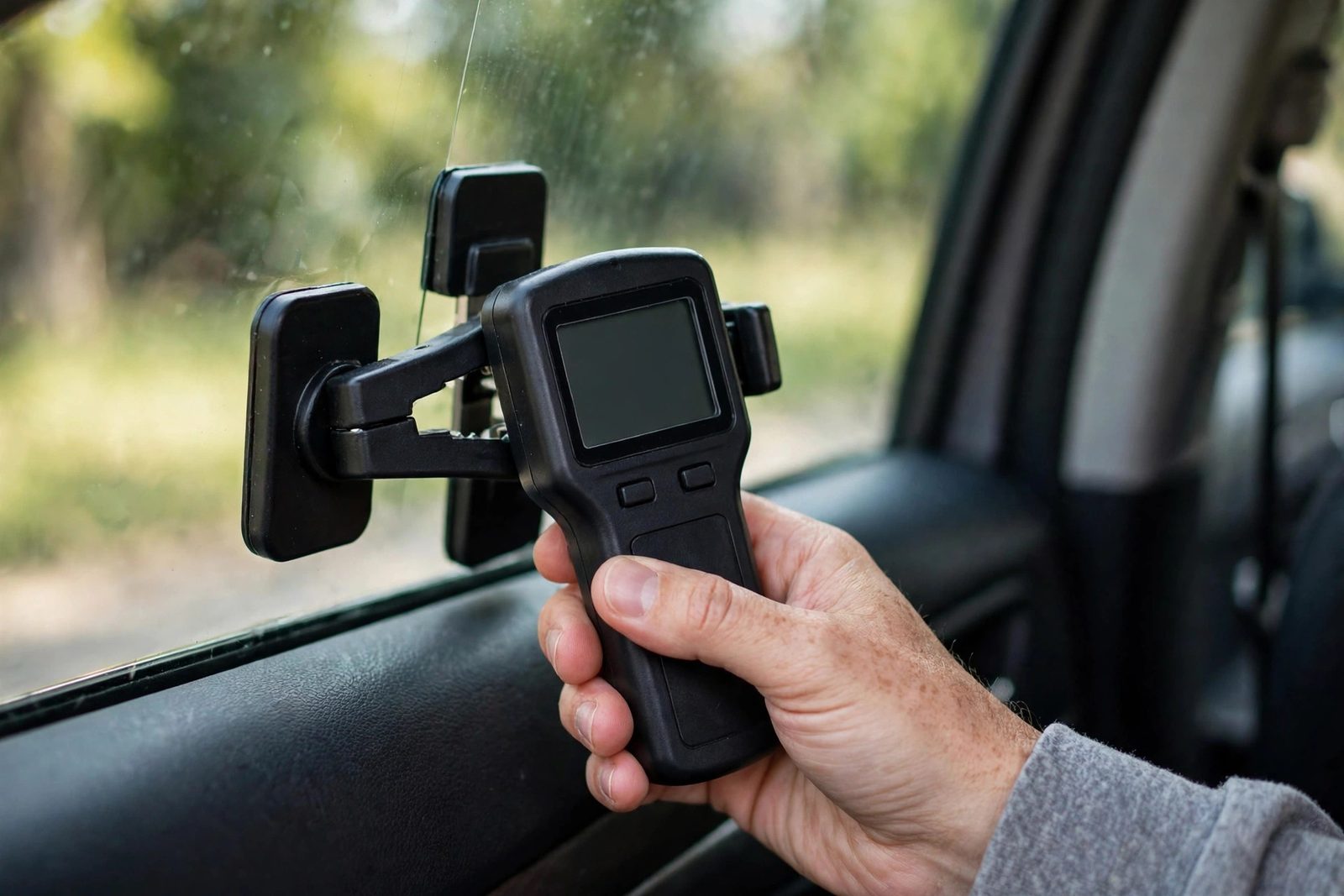
A traffic-stop meter reads the total light passing through your factory glass plus the film. A 35% film over typical factory glass meters darker than 35%, which is why “but the box said 35” is not a defense and why we meter the installed result.
Tolerance is a floor, not a target
The ±3% tolerance means a front window reading 25% sits exactly at the edge. Film ages, meters differ, and glass varies — sensible installs aim comfortably above the minimum so the reading stays legal over the film's life.
Correction usually means removal
Whatever the court outcome, non-compliant film generally has to come off or be replaced to end the problem. That is why a metered, documented legal install is cheaper than a dark gamble plus a removal plus a second install.
Installers share the risk
Because installing illegal tint is itself a misdemeanor, a shop that meters every job and documents VLT on the receipt is protecting itself as well as you. Treat a shop that refuses to meter as a shop asking you to carry its risk.
Common Georgia tint law misunderstandings
These four claims circulate in Snellville parking lots and outdated web pages. Each one is wrong under the current statute, and believing them has real costs.
"Georgia tint is 32% all around"
That was the pre-July-2026 rule. Pages still stating it — including some national tint-law sites — are describing dead law.
Current law: 28% VLT minimum on front side windows, 15% on car rear side windows and the rear windshield, each with ±3% tolerance. The 32% figure survives only as history.
"Trucks and SUVs can go any darkness everywhere"
The multipurpose-vehicle exemption covers windows behind the driver only. Front side windows on an SUV or truck follow the same 28% rule as a sedan's.
And on pickups specifically, we verify classification on the door-jamb certification label before treating rear glass as exempt. “It is a truck” is not, by itself, the legal test.
"The strip can go to the AS-1 line"
Georgia's statute measures the windshield strip as the top 6 inches. The AS-1 line is another framework's marker and can sit lower than 6 inches on some vehicles.
A strip installed to the AS-1 line on the wrong car extends below the legal band. When we install a strip, we measure 6 inches. Period.
"A medical exemption lets me tint the windshield"
The DPS exemption concerns side-window darkness — it can bring fronts to roughly 23% VLT. It does not authorize windshield material beyond the transparent 6-inch strip.
It also cannot be arranged at a tint shop counter. The DPS process runs through your physician or optometrist's office directly, with a $10 fee, and the letter stays in your vehicle for four years.
Situations Snellville drivers ask us about
A car tinted legally in another state, now registered in Georgia
Other states' limits do not transfer. We metered every pane, found the fronts below Georgia's 28% floor, and replaced only those panes with film chosen for the combined reading.
The rears, which met the 15% car floor, stayed. The owner fixed the actual violation instead of re-tinting a compliant car.
An SUV owner who wanted limo-dark rears for the kids
We explained the multipurpose-vehicle exemption behind the driver, confirmed the vehicle qualified, kept the fronts at a documented 28%-plus shade, and installed the darker family shade in back.
The family got the nap-friendly rear cabin they wanted with the driver's windows fully documented and legal.
A driver holding a DPS exemption letter
The owner presented a current DPS medical exemption letter before booking. We reviewed it, installed front film consistent with the exemption's roughly 23% VLT effect, and noted the exemption on the receipt.
The letter stays in the vehicle as DPS requires, and the paperwork trail — letter plus metered receipt — is exactly what the process intends.
Key terms and documents, explained
Tools & Equipment
VLT (visible light transmission)
The percentage of visible light passing through glass and film combined. Georgia's limits are stated in VLT: at least 28% in front, at least 15% on car rears. Lower VLT means darker glass.
HB 1161 (Act 640)
The 2026 Georgia legislation that amended O.C.G.A. § 40-8-73.1, effective July 1, 2026. It replaced the single 32% rule with the 28% front and 15% rear structure and clarified vehicle definitions.
O.C.G.A. § 40-8-73.1
The Georgia Code section governing window tinting on motor vehicles. Building film for homes and businesses is not under this statute — it regulates vehicles only.
Multipurpose passenger vehicle
The statute's category covering vehicles designed to carry up to ten people, built on a truck chassis or with special features for occasional off-road use — most SUVs, trucks and vans. Its rear windows are VLT-exempt under (c)(6).
Tint meter
The handheld device officers and shops use to read combined VLT through glass and film. It is the number that matters at a stop, which is why our receipts record it.
Methods & Techniques
DPS medical exemption letter
The Department of Public Safety approval letter for a medical exemption, valid four years, kept in the vehicle. It follows a physician or optometrist attestation mailed directly from the medical office, with a $10 fee.
Reflectance
How much light the film reflects — the mirror effect. Georgia caps reflectance at 20% on regulated windows, which is why mirrored films fail even when their VLT looks acceptable.
The 6-inch strip
Georgia's windshield exception: transparent material on the uppermost 6 inches, never red or amber. It is measured in inches from the top of the windshield, not by the AS-1 line.
Where to verify this page
Cross-check any figure here against the HB 1161 text and the DPS exemption page linked from this guide. A law summary you cannot verify is just another shop's opinion.
Tint law questions across Snellville and Gwinnett
Drivers bring us law questions from every corner of the county — at the counter in Snellville and from Lawrenceville, Loganville, Grayson, Lilburn and Stone Mountain. The answers start with the same statute, applied to different vehicles.
Service Areas
Most downtown questions concern cars bought or tinted under the old 32% rule. The meter settles which of those cars still comply — many do, since 32%-era film often meters near today's floors.
Commuter vehicles tinted out of state generate the Highway 124 questions. Georgia registration means Georgia limits, whatever the previous state's receipt says.
Family SUV owners here ask the MPV question most: yes, rears behind the driver are VLT-exempt on a qualifying vehicle; no, that never extends to the front doors.
First-car questions cluster near Brookwood: parents want a student's car plainly legal, and a lighter ceramic at a documented reading is the usual answer.
Pickup owners ask whether “truck” automatically means exempt rears. Our answer is the door-jamb certification label check — verification before any darker rear install.
Local Considerations
This law covers vehicles, not buildings
O.C.G.A. § 40-8-73.1 applies to motor vehicles. There is no Georgia VLT law for home or commercial window film; HOA covenants and glass warranties are the constraints that matter there instead.
Stale pages are the biggest risk
Search results still surface the pre-2026 32% rule as if current. Check any tint law page for an HB 1161 mention and a 2026 verification date before trusting its numbers.
Documentation beats memory
A receipt recording your installed VLT, film type and date answers most questions a stop can raise. We provide one with every install because memory of a shade name proves nothing.
When in doubt, ask DPS or counsel
Shop summaries — including this one — explain the law; they do not decide cases. Medical questions belong to the DPS process, and legal questions belong to an attorney.
How a meter check settled a worried driver's question
A Snellville driver arrived convinced their two-year-old tint had become illegal overnight when HB 1161 took effect, and was ready to pay for a full removal.
We metered every pane. The fronts read within the new 28% rule and the rears within the 15% rule, because the original install had used conservative shades. Nothing needed to change.
What the owner kept
A written set of readings for every window, dated after the law change — reassurance on paper instead of a needless removal bill.
A pickup owner asked for the darkest legal rear glass and quoted a forum post promising trucks were fully exempt. The post was half right, which is the dangerous kind.
We checked the door-jamb certification label together, confirmed how the truck is classified, kept the fronts strictly legal, and installed rear film on the verified basis.
What the owner kept
A receipt noting the classification check alongside the shades installed — the reasoning documented, not just the result.
A parent wanted a student's sedan tinted “as dark as legal” and worried the student would be stopped on the way to school.
We chose ceramic shades metering comfortably above both floors rather than at them, installed a 6-inch windshield strip measured in inches, and recorded every reading.
What the owner kept
Readings with margin built in — so normal meter variation and film aging never put a young driver near the enforcement floor.
Georgia tint law questions, answered
The questions this pillar exists to answer, in short form. For installed pricing under these limits, see our pricing page — and remember this page is a summary, not legal advice.
Call UsWhat is the legal tint in Georgia in 2026?
Under HB 1161, effective July 1, 2026: front side windows at least 28% VLT (±3% tolerance), rear side windows and rear windshield on cars at least 15% VLT (±3%), reflectance at most 20%, and only a transparent top 6-inch strip on the windshield. Multipurpose vehicles are exempt from VLT limits behind the driver. This is a plain-English summary of O.C.G.A. § 40-8-73.1, not legal advice.
Is 20% tint legal in Georgia?
It depends on the window. On front side windows: no — 20% is below the 28% minimum. On a car's rear side windows or rear windshield: yes, 20% sits above the 15% minimum. Behind the driver on a multipurpose vehicle: yes, those windows are VLT-exempt. The window and the vehicle decide the answer, never the number alone.
How do I get a medical exemption for darker tint in Georgia?
Through the Georgia Department of Public Safety. A licensed physician or optometrist must attest to your condition, and their letter — on letterhead, justifying a 9% reduction of visible light rather than UV — must be mailed directly from the medical office to the DPS Office of Professional Standards with the $10 fee. The DPS medical exemption page carries the official process. O2 does not issue or broker exemptions.
What happens if my tint is too dark in Georgia?
A violation is a misdemeanor for the driver and for whoever installed the film, with maximum exposure of up to a $1,000 fine and up to 12 months in jail. In practice, non-compliant film generally must also be removed or replaced. Officers test with a meter reading film and glass combined — which is why our shop meters and documents every install.
Ratings and reviews for O2 Window Tinting
What backs every install
Google reviews
Brought my vehicle in to get windows tinted. Owner helped me make what I felt was the best choice, based on the outcome I wanted. He explained the difference between the variety of window film that he had and their properties. I got my 2 front windows done and I done in no time, so I just sat in his shop and watched the TV. Love the results, time, and customer service. Thank you.
I have gotten about 4 vehicles tinted with O and he has been nothing short of amazing during each and every process. He explained everything so I could understand and made sure to tell me when something would be a waste of money (paying him to put ceramic on top of the dealer tint). I feel valued as a customer and his work speaks for itself! I would 1000% recommend O if you're wanting to get tint. He's fair, super knowledgeable and the customer service is superb.
Great experience! Fast and friendly service. Knowledgeable about tinting and years of experience. I will definitely be back and recommending this place to others.
Brought my vehicle in to get windows tinted. Owner helped me make what I felt was the best choice, based on the outcome I wanted. He explained the difference between the variety of window film that he had and their properties. I got my 2 front windows done and I done in no time, so I just sat in his shop and watched the TV. Love the results, time, and customer service. Thank you.
Related Services
Explore our other professional services
Car Window Tinting
Sedans and coupes tinted full-vehicle in ceramic, carbon or dyed film — metered legal, computer-cut, done in hours.
Car Window TintingCeramic Window Tint
Maximum heat rejection without a darker shade: nano-ceramic film, up to 99% UV block, no signal interference.
Ceramic Window TintCarbon Window Tint
The color-stable workhorse — strong heat cut, matte factory look, and it can never turn purple.
Carbon Window TintTruck Window Tinting
Legal fronts and work-ready privacy behind the driver, verified from your truck’s own door-jamb label.
Truck Window TintingSUV Window Tinting
Darker rear glass where Georgia allows it, cool third rows, fronts metered legal.
SUV Window TintingTesla & EV Window Tinting
Ceramic for EV glass and panoramic roofs — serious heat control with zero sensor or signal issues.
Tesla & EV Window TintingResidential Window Tinting
HOA-friendly solar and privacy film for west glass, sunrooms and two-story rooms.
Residential Window TintingCommercial Window Tinting
Storefront, office and medical glass — measured on site, installed around your hours.
Commercial Window TintingStorefront Window Tinting
Glare control that keeps displays bright and merchandise unfaded, plus anti-graffiti options.
Storefront Window TintingOffice Window Tinting
Frost privacy and solar control for workplaces, installed without disrupting the day.
Office Window TintingWindow Tint Removal
Failed film steamed off clean — defroster lines protected, glass left spotless.
Window Tint RemovalWindow Tint Repair
Peeling or bubbling film assessed honestly: save what can be saved, replace only what has failed.
Window Tint RepairWhat Snellville drivers say about O2
O2 Window Tinting holds 4.9 stars from 603 Google reviews. A few of them, in the reviewers' own words:
The owner was very transparent about what he does and who he is and what he charges. He had all of the professional cutting equipment and software with database of vehicle window shapes by model. Shelves of various grades of tint. This is the business he is in. Although I did not question why he charged a certain price, he still explained. I've learned to develop an eye for a person with a "craft". When you find a person with a craft and holds a certain amount of integrity, you don't question how long it takes, what it costs, or why they charge their price - unless you're doing a documentary. My windows are holding up very nicely! My car has been back to the dealer immediately after for other work and they respected the sticker requesting not to roll down windows. Great work and professionalism by O2!
Rich
Google review
I love my window tint! I brought my car down the same day and it was done before I knew it along with 2 other customers cars. They're very professional, knowledgeable, and very efficient in what they do. I will definitely continue to bring my cars, and recommend to everyone that this is the best place to get your window tint done!
Tiffany
Google review
My experience was very professional from start to finish at 02 Window Tinting. It did not take long at all and I drove away very satisfied with the work.
Carma Reese
Google review
Get a legal, metered tint in Snellville
If you want tint chosen against the current law — not the old 32% rule — visit O2 Window Tinting at 3304 Stone Mountain Hwy, Snellville, GA 30078 or call (770) 674-2766, Mon–Fri 9 AM–6 PM and Sat 9 AM–5 PM, closed Sundays. We meter your glass before recommending film and document the installed reading on your receipt.